
Among several diets tested in a clinical trial, a ketogenic diet produced the greatest improvements in liver and metabolic health.
Losing the same amount of weight does not necessarily produce the same metabolic benefits. In a randomized clinical trial, three very different diets helped adults with obesity lose about 10% of their starting weight, but the ketogenic diet produced larger improvements in liver fat, liver insulin sensitivity, and blood sugar control.
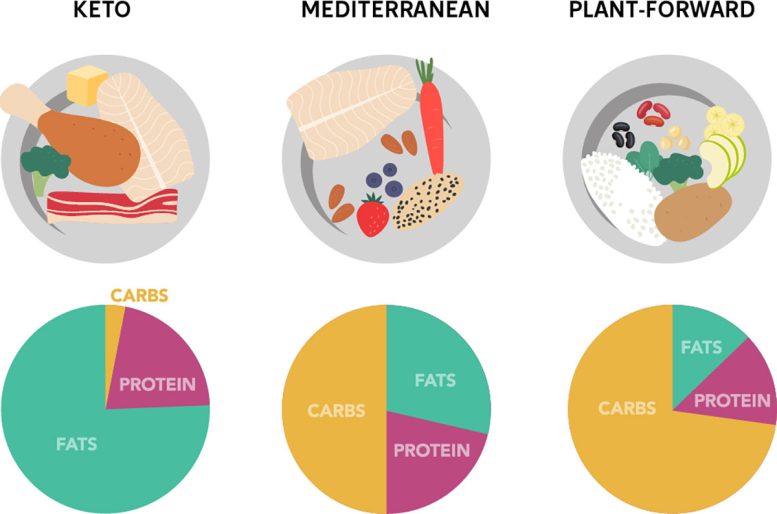
Researchers at Washington University School of Medicine in St. Louis compared a low-carbohydrate, high-fat ketogenic diet with a Mediterranean diet and a high-carbohydrate, low-fat, plant-forward diet. The study included 55 adults with obesity who also had prediabetes and excess fat in the liver.
All three diets improved metabolic health, underscoring the benefits of weight loss itself. But the ketogenic diet provided additional improvements in several measures related to the liver and blood sugar.
“For patients with obesity, prediabetes, and fatty liver disease, weight loss induced by a very low-carbohydrate diet provides additional therapeutic effects on glucose and lipid metabolism that should further help prevent the progression to more severe metabolic diseases than weight loss alone,” said Samuel Klein, MD, the Danforth Professor of Medicine and Nutritional Science at WashU Medicine and the study’s senior author. “But all three diets — despite vastly different macronutrient makeups, from very low carbohydrates to very high carbohydrates — successfully improved metabolic health through weight loss alone.”
Muscle health improved across all diets
Participants followed their assigned diets for about five months. The researchers provided all of their food and held weekly meetings with a study dietitian to help them follow the plans closely.
Despite the diets containing very different proportions of carbohydrates, fat, and protein, all three groups lost about the same amount of weight.
Insulin helps the body regulate blood sugar, and insulin resistance is a major feature of prediabetes. Across all three diets, muscle insulin sensitivity improved by roughly 50% from the participants’ starting levels.
Because the improvement was similar in all three groups, the results suggest that weight loss itself, rather than the particular balance of carbohydrates and fat, was the important factor in improving muscle insulin resistance.
Keto pulled ahead in the liver
Insulin normally signals the liver to reduce the amount of glucose it releases into the bloodstream. In the trial, the liver became more responsive to insulin with all three diets, but the improvement was two to three times greater with the ketogenic diet.
The ketogenic group also experienced the largest decrease in liver fat. After five months, liver fat had fallen by 67%, compared with 45% in each of the other two groups.
That difference could be particularly important for people with obesity, among whom fatty liver disease is widespread.
“Fatty liver disease affects about 75% of adults with obesity worldwide and has become the fastest-growing cause of chronic liver disease and liver cirrhosis,” said Max C. Petersen, MD, PhD, the study’s first author and an assistant professor of medicine at WashU Medicine. “Our study shows that for people with obesity and fatty liver disease, a low-carbohydrate ketogenic diet could help reduce that statistic.”
Keto improved blood sugar the most
Blood sugar control showed a similar advantage. Blood glucose measured over 24 hours fell 20% from baseline in the ketogenic group, compared with 8% in each of the other groups.
Insulin levels throughout the day also declined more sharply, dropping 74% on the ketogenic diet, compared with 44% on the Mediterranean diet and 27% on the high-carbohydrate diet. With very little carbohydrate being consumed, less insulin is needed to regulate blood glucose, reducing the amount the pancreas needs to produce.
The differences also extended to prediabetes. Half of the participants on the ketogenic diet reversed their prediabetes during the study, compared with 29% of those following the Mediterranean diet and 7% of those on the high-carbohydrate diet.
Weight loss still helped every group
Still, the results do not suggest that the other diets were ineffective. All three groups experienced metabolic improvements after losing weight.
“Weight loss — even just a moderate amount — is universally beneficial in people who are metabolically unhealthy,” said Petersen. “Many metabolically unhealthy patients also are candidates for GLP-1 medicines, which have been very useful tools for helping people lose weight. But our results show that choice of diet remains important because it has an impact on specific health outcomes that go beyond weight loss alone.”
Reference: “Effect of diet macronutrient content on the cardiometabolic response to weight loss: A randomized clinical trial” by Max C. Petersen, Gordon I. Smith, Sarah S. Farabi, Hector H. Palacios, Mahalakshmi Shankaran, Marc K. Hellerstein, Bruce W. Patterson and Samuel Klein, 27 August 2026, Cell Metabolism.
DOI: 10.1016/j.cmet.2026.07.020
This study was supported by grants from the National Institutes of Health, grant numbers P30 DK56341, P30 DK20579, UL1 TR002345 (subaward KL2 TR002346) and S10 OD027006 and from the Foundation for Barnes-Jewish Hospital. The content is solely the responsibility of the authors and does not necessarily represent the official view of the NIH.
Disclosure: Klein S reports receiving scientific advisory board fees from Abbvie, 89Bio, and Boehringer Ingelheim, an investigator-initiated grant from Merck and support for an industry-initiated multi-center clinical trial from Viking Therapeutics.
Never miss a breakthrough: Join the SciTechDaily newsletter.
Follow us on Google and Google News.