Some brains appear to age faster than their owners, and clues to that difference may be hiding in the gut.
A UCLA Health study links patterns of brain activity in generally healthy adults to gut bacteria and the chemicals associated with them. The findings raise the possibility that biological signs of brain aging can be detected long before noticeable cognitive problems develop.
A brain’s estimated age can differ from a person’s actual age. Previous studies have linked an older-looking brain to difficulties with memory, thinking, and mood, but they have largely focused on older adults or people with brain disease. Researchers knew less about what the difference might mean earlier in life.
What An Older-Looking Brain May Signal
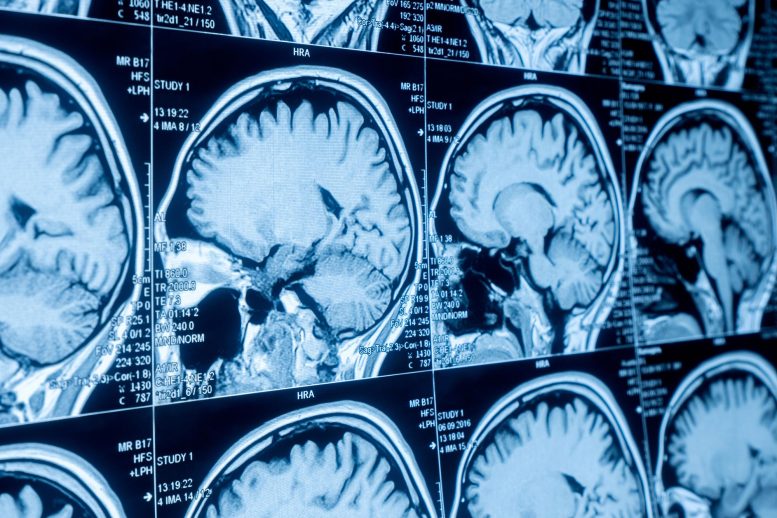
In a new study published in eBioMedicine, researchers examined resting brain scans from nearly 1,500 adults across three groups. Rather than looking for lost brain tissue, they studied how different regions communicated. A computer model used those patterns to estimate each person’s brain age, and the researchers called the difference between that estimate and their actual age the Brain Aging Index (BAI).
Across all three groups, people with a higher index tended to perform worse on tests of working memory, focus, and organization. Their brain scans also showed consistent patterns in regions involved in memory and self-reflection. Participants with a higher index reported more symptoms associated with depression as well.
Clues From the Gut
For one group, the team also analyzed stool samples. A higher Brain Aging Index was associated with certain gut bacteria and metabolic byproducts, including specific fat molecules, a cholesterol-related compound, and lower levels of the hormone estetrol. The implicated biological pathways involved immune activity, blood vessel function, signaling between brain cells, and cellular energy production.
“Brain aging doesn’t suddenly begin when we get older, but the biological signals may be detectable decades earlier,” said senior author Dr. Arpana Church, co-director of the Goodman-Luskin Microbiome Center at UCLA Health. “By linking these early brain changes with the gut microbiome and its metabolites, we are beginning to identify pathways that could ultimately help us understand who may be at risk and, importantly, where we might intervene to support healthier brain aging. This ultimately opens the door to exploring whether targeting gut health could one day support healthier brain aging.”
Church said the findings could eventually help identify people at greater risk of cognitive or mood decline earlier in life and guide research into ways to support brain health through the gut.
Reference: “Brain-gut crosstalk associated with brain ageing in young and mid-life adults: a multicohort cross-sectional study” by Kanhao Zhao, Gabriel A. Vignolle, Jennifer S. Labus, Emeran A. Mayer, Allison Vaughan, Marika Dy, Priten Vora, Ming W. Hung, Keith Vossel, Chris Gill, Daniele Del Rio, Catherine Stanton, R. Paul Ross, John F. Cryan, Rima Kaddurah-Daouk, Yu Zhang and Arpana Church, 9 September 2026, eBioMedicine.
DOI: 10.1016/j.ebiom.2026.106468
This study was funded by the NIH/National Institutes of Health.
Never miss a breakthrough: Join the SciTechDaily newsletter.
Follow us on Google and Google News.