
A pilot study suggests that oil from underused Hinoki roots could be used in scented products for relaxation.
Falling asleep can be compared to easing down a dimmer switch, with brain activity gradually shifting as sleep deepens. Researchers studying Hinoki, or Japanese cypress, are exploring whether its scent could help smooth that transition for women in middle age, when sleep problems are common.
In a small study, 12 Japanese women aged 35 to 60 used essential oil extracted from Hinoki roots at bedtime in their own homes. Compared with an unscented control, repeated use over two weeks was associated with fewer nighttime awakenings and feeling less sleepy and more recovered from fatigue in the morning. Brain-wave recordings also showed changes consistent with a smoother transition into deeper sleep.
Hinoki’s sleep test leaves the lab
“In our earlier work, we examined sleep quality over a single day in a laboratory-like setting. However, sleep is strongly influenced by daily routines and the home environment. Therefore, we decided to examine the effect of repeated use over two weeks in participants’ own bedrooms using both subjective assessments and physiological measurements,” says Associate Professor Kuniyoshi Shimizu of Kyushu University’s Faculty of Agriculture.
For the study, published in the Journal of Wood Science, the researchers used a single-blind crossover design. Each participant tried the Hinoki oil for two weeks and the unscented control for two weeks. On nights when they used the oil, the women put three drops in a paper cup, inhaled the scent for 10 seconds, and left the cup about 30 centimeters, or 12 inches, from their nose while sleeping.
A wearable brain-wave headband and a smartwatch recorded their sleep, while a questionnaire completed each morning captured their own assessments.
“By combining physiological measurements with participants’ subjective assessments, we were able to examine sleep from multiple perspectives under everyday home conditions, which was an important aspect of this study,” emphasizes Shimizu.
Brain waves suggest smoother sleep onset
After seven days of using the oil, participants showed greater delta-wave activity around the time they fell asleep. Delta waves are slow brain waves associated with deep sleep, and the pattern was consistent with a smoother transition into deeper sleep.
The improvements in morning sleepiness and recovery from fatigue were reported by day 13. Smartwatch measurements supplied the evidence of fewer awakenings during the night. Participants also described the Hinoki aroma as more relaxing, comfortable, likable, elegant, nostalgic, and woody than the control.
“Our findings suggest that repeated use of Hinoki root essential oil at home may support sleep initiation, sleep continuity, and feeling refreshed in the morning,” says Shimizu.
Hinoki roots could become bedroom aromas
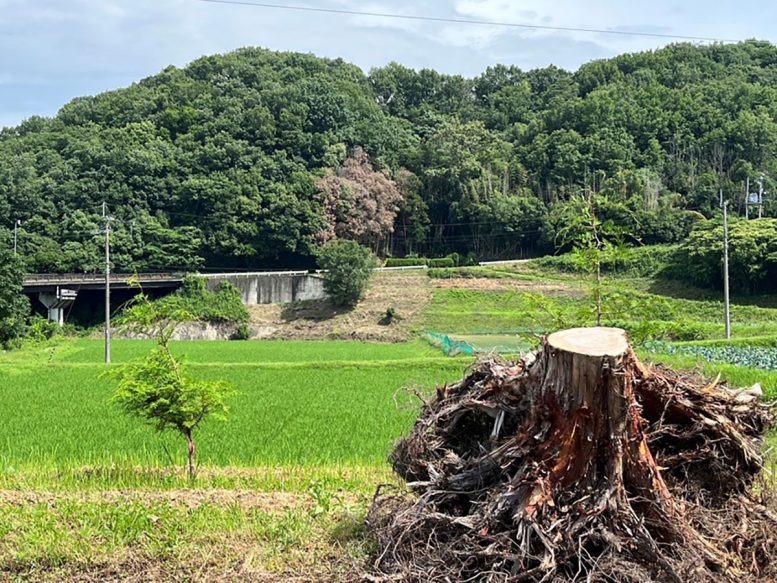
The choice of oil also reflects a question about how to use material left behind by forestry. Hinoki (Chamaecyparis obtusa) is widely used for timber in Japan, yet its roots often go unused after logging. They contain aromatic compounds that can be extracted to make essential oils. Oils from Hinoki branches and leaves have already received research attention, while those from its roots remain less studied.
“We wanted to address two questions: whether essential oil production could add value to underused Hinoki roots and whether that oil could improve sleep,” says Shimizu.
Possible applications include aroma products made from Hinoki roots for bedrooms or other relaxation settings. The simple bedside setup could also serve as a model for testing aromatic materials in people’s homes, while encouraging more valuable uses for roots and other forestry residues. Further research is needed to determine appropriate products, doses, and conditions of use.
Reference: “Sleep improvement by Kagawa Hinoki root volatiles in middle-aged women: a home-based pilot study” by Fadilla Zennifa, Akiko Isa, Erika Tomimatsu, Yanli Xu, Ryuma Taki, Hiroo Yasutomi, Naotoshi Yasumori and Kuniyoshi Shimizu, 01 September 2026, Journal of Wood Science.
DOI: 10.1186/s10086-026-02296-3
This study was supported by Kyushu University and collaboration with Ouken Co., Ltd.
Never miss a breakthrough: Join the SciTechDaily newsletter.
Follow us on Google and Google News.